

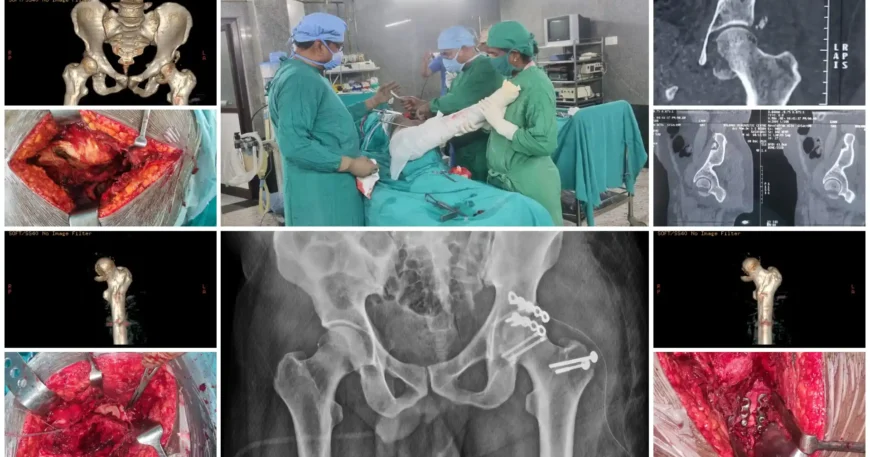
Pipkin Fracture (Femoral Head Fracture) Treatment | Balanku Hospital

Pipkin Fracture of the Pelvis (Femoral Head Fracture)
Advanced Trauma & Orthopedic Care at Balanku Hospital
High-energy trauma such as road traffic accidents or severe falls can cause complex hip injuries. One such rare but serious injury is a Pipkin fracture, which involves a fracture of the femoral head (the ball of the hip joint), often associated with hip dislocation and pelvic trauma. This condition can severely affect mobility, stability, and long-term hip function if not treated promptly and correctly.
At Balanku Hospital, our expert orthopedic trauma specialists provide comprehensive and advanced care for Pipkin fractures, focusing on precise fracture management, joint preservation, and early rehabilitation to help patients regain mobility and quality of life.
What Is a Pipkin Fracture?
A Pipkin fracture is a classification of femoral head fractures that typically occur following posterior dislocation of the hip. These injuries are uncommon and usually result from high-impact trauma, making them a medical emergency.
Types of Pipkin Fractures
Pipkin fractures are classified into four types:
- Type I:
Fracture of the femoral head below the fovea (non-weight-bearing area) - Type II:
Fracture above the fovea involving the weight-bearing surface - Type III:
Type I or II fracture associated with a femoral neck fracture - Type IV:
Type I or II fracture associated with an acetabular (pelvic socket) fracture
Causes of Pipkin Fracture
- Road traffic accidents
- High-impact falls from height
- Sports injuries involving severe trauma
- Industrial or occupational accidents
Symptoms
- Severe hip and groin pain
- Inability to bear weight or walk
- Shortened or rotated leg
- Hip stiffness and deformity
- Swelling and bruising around the pelvis or hip
Diagnosis
Accurate diagnosis is crucial and includes:
- X-rays of the pelvis and hip
- CT scan for detailed fracture assessment
- MRI in selected cases to assess soft tissue and cartilage damage
Treatment of Pipkin Fracture
Treatment depends on fracture type, displacement, patient age, and overall health.
Non-Surgical Management
- Reserved for small, non-displaced fractures
- Closed reduction of hip dislocation
- Strict bed rest and protected weight-bearing
- Regular imaging follow-up
Surgical Management
Surgery is often required in most Pipkin fractures and may include:
Open Reduction and Internal Fixation (ORIF)
- Fracture fragments are realigned and fixed using screws or plates
- Aims to preserve the native hip joint
Hip Arthroscopy (Selected Cases)
- Minimally invasive removal or fixation of small fracture fragments
Hip Replacement Surgery
- Considered in elderly patients or severely damaged femoral head
- Provides pain relief and restores mobility
Procedure Overview
| Procedure Name | Pipkin Fracture Surgery |
|---|---|
| Type of Surgery | Major Trauma Surgery |
| Type of Anesthesia | General anesthesia |
| Procedure Duration | 2 to 4 hours |
| Recovery Duration | Several months |
Recovery & Rehabilitation
- Hospital stay for monitoring and pain control
- Early physiotherapy to prevent stiffness
- Gradual progression from partial to full weight-bearing
- Regular follow-up imaging to assess healing
- Long-term rehabilitation to restore hip strength and mobility
Full recovery may take 3 to 12 months, depending on injury severity and treatment approach.
Possible Complications (If Untreated or Delayed)
- Avascular necrosis (loss of blood supply to femoral head)
- Post-traumatic arthritis
- Chronic hip pain and stiffness
- Recurrent hip instability
Benefits of Treatment at Balanku Hospital
- Expert orthopedic trauma surgeons
- Advanced imaging and surgical planning
- Joint-preserving surgical techniques
- Multidisciplinary rehabilitation care
- Focus on long-term hip function and mobility
At Balanku Hospital, we specialize in managing complex pelvic and hip injuries like Pipkin fractures with precision, expertise, and compassionate care—helping patients return to an active and independent life.
